Epoxy garage floor coating cost: what actually drives the price
By Dana Whitfield · Updated 2026-08-07
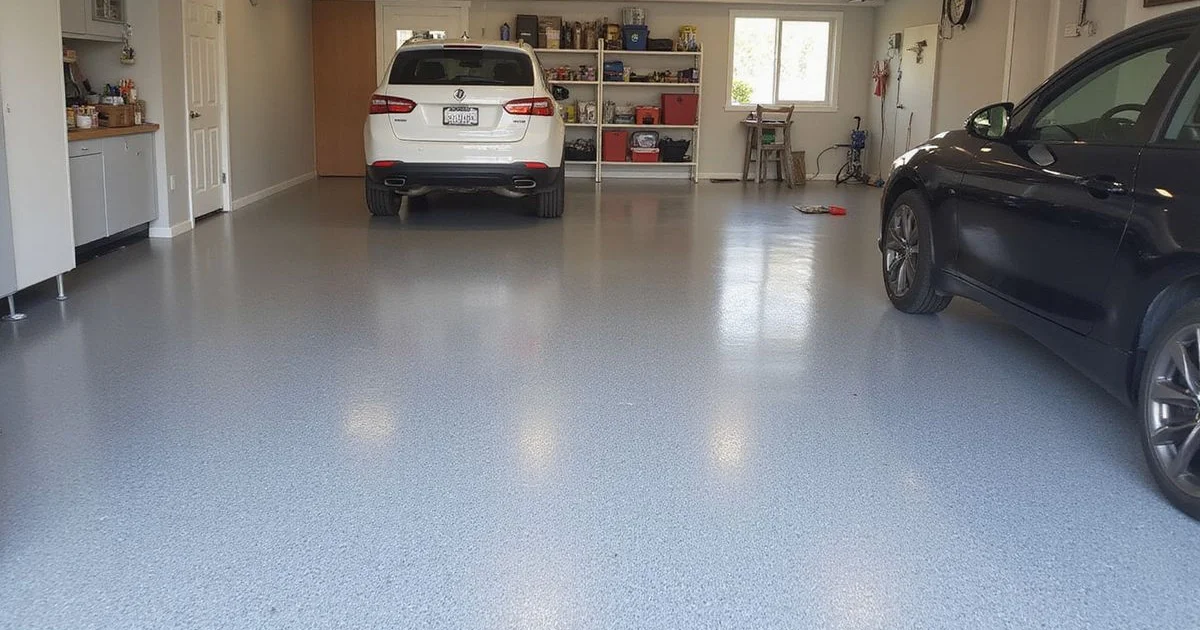
Epoxy and polyaspartic coatings turn a dusty, stained concrete garage floor into something that actually looks finished and holds up to tires, tools, and spills. The final price depends heavily on which coating system you pick and how much prep the slab needs before anything gets applied.
Cost by coating type
| Coating type | Relative cost | Best for |
|---|---|---|
| Basic single-coat epoxy | Lowest | Light-use garages, budget-conscious projects |
| Standard multi-coat epoxy | Mid-range | Most residential garages, good durability |
| Polyaspartic or metallic finish | Highest | Heavy use, fast turnaround, longer-lasting shine |
A standard two-car garage, roughly 400-480 square feet, is the baseline most Connecticut contractors quote against. Larger garages, workshops, or basements scale up from there, and a metallic or polyaspartic finish on the same footprint can run noticeably above a basic epoxy job on the same slab. If you’re weighing an epoxy coating against other flooring upgrades in the house at the same time, our flooring installation cost guide breaks down typical per-square-foot pricing for carpet, tile, and hardwood.
What the concrete’s condition does to the price
Surface prep is where a lot of the real cost hides. A slab in good shape needs only light cleaning before coating. Average condition, meaning a few cracks or minor pitting, adds patching and grinding time. Poor condition, with wide cracks, spalling, or old coating that has to be ground off, adds the most labor and can push the total up by 30% or more over a good-condition slab of the same size.
Moisture is the other variable that’s easy to miss. Concrete below grade, like a basement floor, can trap moisture that causes a coating to bubble or peel if it isn’t checked with a moisture test and addressed first.
How the job works, step by step
- Inspection and moisture check. The contractor evaluates the slab and checks for moisture issues that could affect adhesion.
- Grinding or etching. The surface gets mechanically ground or chemically etched so the coating has something to grip. This step matters more for long-term durability than almost anything else in the process.
- Crack and pit repair. Damaged areas get patched and leveled before coating.
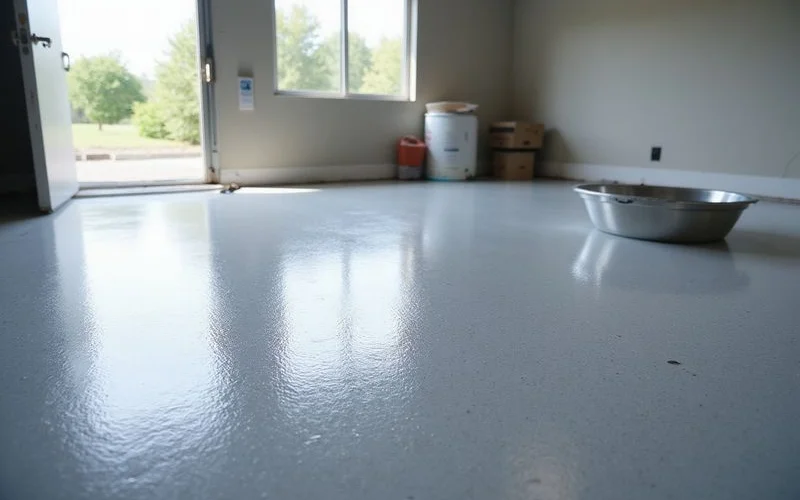
- Base coat. The primary epoxy or polyaspartic layer goes down, sometimes with decorative flakes broadcast into it for texture and hiding minor imperfections.
- Topcoat. A clear protective layer seals everything and adds gloss and chemical resistance.
- Cure time. Foot traffic is usually safe first, with vehicle traffic cleared later once the coating has fully hardened.
Questions worth asking before you book
Ask specifically what grinding or etching method is used. A coating applied over a floor that was only cleaned, not mechanically prepped, is far more likely to peel within a year or two, and it’s one of the most common corners cut on a rushed or underpriced job. Also ask about the warranty terms in writing: how long it covers, and whether peeling or lifting is included.
Decorative flakes and metallic finishes
Beyond the base coating type, many homeowners add decorative color flakes broadcast into the base coat, which do more than add visual interest: they help hide minor surface imperfections and add a bit of texture underfoot. Metallic finishes push this further with a marbled, three-dimensional look achieved by manipulating pigment while the coating is still wet, which takes more installer skill and adds to the cost accordingly. If a striking, showroom-style finish matters to you, ask to see photos of the installer’s previous metallic work specifically, since the technique varies noticeably between crews.
DIY epoxy kits vs. a professional job
The tradeoffs here are similar to the broader DIY vs. hiring a flooring contractor decision. Home improvement stores sell epoxy kits marketed for DIY garage floors, and the upfront cost looks appealing. The tradeoff is almost always in surface prep and product quality: store kits typically use a thinner, lower-grade epoxy than what a professional applies, and DIY prep frequently skips the mechanical grinding step a pro would do, relying on acid etching alone. That combination is the single most common reason DIY epoxy jobs peel or lift within a year or two, turning a cheaper upfront project into a more expensive redo once professional-grade removal and reapplication gets factored in.
Contractors who specialize in this work are listed under our epoxy and concrete flooring category, scored using the same rating methodology we apply across the whole directory.
For other flooring projects, the homepage is the fastest way to browse by category and compare contractors before requesting quotes.
Common questions
- How much does epoxy garage flooring cost?
- A basic single-coat epoxy system costs the least per square foot; a standard multi-coat epoxy sits in the middle; polyaspartic or metallic finishes cost the most. A typical two-car garage runs into the low thousands depending on which system you choose.
- Why is polyaspartic more expensive than epoxy?
- Polyaspartic coatings cure much faster, resist UV yellowing better, and hold up longer under vehicle traffic and hot tires. The higher material cost buys durability and a faster turnaround.
- Do I need to fix cracks in the concrete first?
- Yes. Any coating applied over cracked or damaged concrete will crack or lift in the same spots. Surface prep and crack repair happen before the coating goes on, and the worse the slab's condition, the more that prep adds to the price.
- How long before I can park in the garage again?
- Light foot traffic is usually fine within a day or two, but most coatings need several days to a week before they can handle vehicle weight, depending on the product and temperature.