Best carpet options for homes with kids and pets
By Dana Whitfield · Updated 2026-09-07
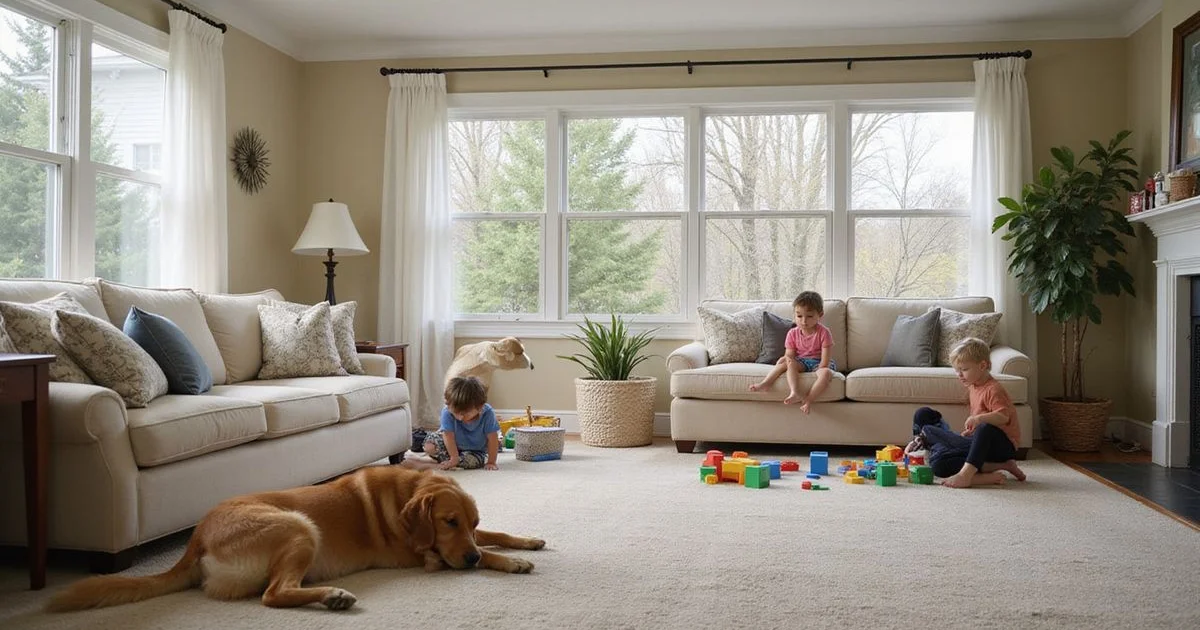
Carpet takes more punishment in a house with kids and pets than almost anywhere else in the home: spills, shedding, claws, and constant foot traffic. The right fiber, pile, and padding combination makes a real difference in how the carpet looks and performs two or three years in, not just on install day.
Fiber matters more than most people think
Solution-dyed nylon and solution-dyed polyester are the two fibers most commonly recommended for households with pets and kids. Solution dyeing means the color is mixed into the fiber before it’s spun, rather than applied to the surface afterward, which makes the color far more resistant to fading from cleaning products, sun exposure, and pet accidents. Standard dyed carpets can lose color or develop permanent stains from things that a solution-dyed fiber shrugs off.
Pile type: cut vs. loop, for this specific use case
| Pile type | Pros for kids and pets | Watch for |
|---|---|---|
| Loop pile | Hides dirt well, resists matting from foot traffic | Pet claws can snag and pull loops over time |
| Short, dense cut pile | Durable, resists crushing, relatively easy to clean | Less plush feel than longer pile options |
| Long, plush cut pile | Comfortable underfoot | Mats down faster under heavy traffic, harder to keep looking fresh |
For most households with active kids and pets, a short, dense cut pile or a tight loop pile in a busy area outperforms a plush, long pile option, even though the plush option often feels nicer in the showroom.
Padding: the part nobody sees but everyone feels
Denser padding supports carpet fibers and resists compressing under furniture legs and constant traffic. Thin or low-density padding lets the carpet above it wear out faster, since the fibers have less support underneath them. When comparing carpet options, ask what padding density is included or recommended, not just which carpet looks best on its own.
Stain resistance treatments
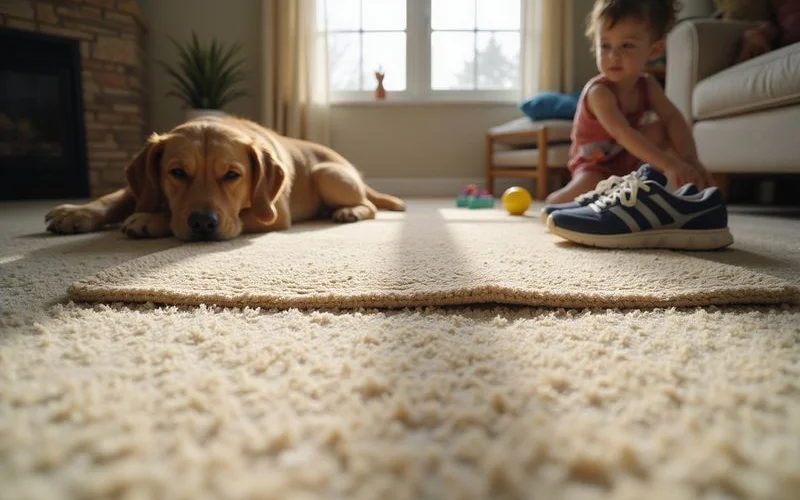
Many carpets come with a factory-applied stain treatment on top of the fiber’s inherent resistance. This helps with spills if cleaned up promptly, but it isn’t permanent and wears down over years of foot traffic and cleaning, so it’s a bonus rather than a substitute for choosing a genuinely stain-resistant fiber in the first place.
Keeping it looking good over time
Vacuum on a regular schedule, since dirt and grit ground into carpet fibers cause more long-term wear than the traffic itself. Address spills immediately rather than letting them set. And plan for professional deep cleaning roughly once or twice a year in a household with pets, which resets the fibers and pulls out ground-in dirt that regular vacuuming can’t reach.
Choosing carpet by room
A busy family room or a hallway that gets constant traffic from kids and pets calls for the most durable fiber and pile combination you can afford, since that’s where wear shows up first. Bedrooms, where traffic is lighter and comfort matters more, can reasonably carry a slightly plusher pile without the same durability tradeoff. If budget is limited, it’s often smarter to put the best-performing carpet in the highest-traffic rooms and save on lower-traffic spaces rather than spreading a mid-range product evenly across the whole house. Renting rather than owning changes this calculus too; our guide to flooring options for renters covers which carpet and rug choices are safe without risking a deposit.
Odor control matters as much as stain resistance
Pet accidents create two separate problems: visible staining and lingering odor that can work its way into the padding underneath, not just the carpet fibers themselves. Some padding products are made with a moisture barrier specifically to stop liquid from reaching the subfloor, which makes cleanup far more effective and prevents a smell from becoming a permanent part of the room. If odor control is a priority, ask specifically about padding with a built-in moisture barrier rather than assuming any dense pad handles this the same way.
What to check when comparing samples
Bring a sample home and test it the way it will actually be used: press a fingernail into the pile to see how quickly it springs back, and if possible, check how a small water spill behaves on the surface. A showroom sample under good lighting can look nearly identical to a lower-quality product, and these two quick checks reveal durability differences that aren’t obvious from a photo or a short in-store visit.
Compare installers who work with residential carpet under our carpet installation category, rated using our scoring methodology, or start from the homepage to browse other flooring options.
Common questions
- What carpet fiber holds up best with pets?
- Solution-dyed nylon and polyester carpets tend to resist staining and hold color well against accidents and shedding. Solution-dyed means the color runs through the whole fiber, so it doesn't bleach out as easily from cleaning or sun exposure.
- Is cut pile or loop pile better for kids and pets?
- Loop pile is more resistant to matting from foot traffic and generally hides dirt well, but pet claws can snag loops over time. Cut pile with a shorter, denser construction tends to balance durability and pet-friendliness better than long, plush cut pile.
- Does carpet padding matter for durability?
- Yes, significantly. Denser padding supports the carpet fibers better and resists compression from furniture and traffic, which extends the life of the carpet on top of it, especially in high-traffic homes with kids and pets.
- How often should carpet be professionally cleaned with pets in the house?
- Roughly once or twice a year is common for households with pets, more often for allergy-sensitive members or heavier shedding breeds. Regular vacuuming between cleanings matters just as much for keeping fibers from matting down.