What commercial flooring work covers
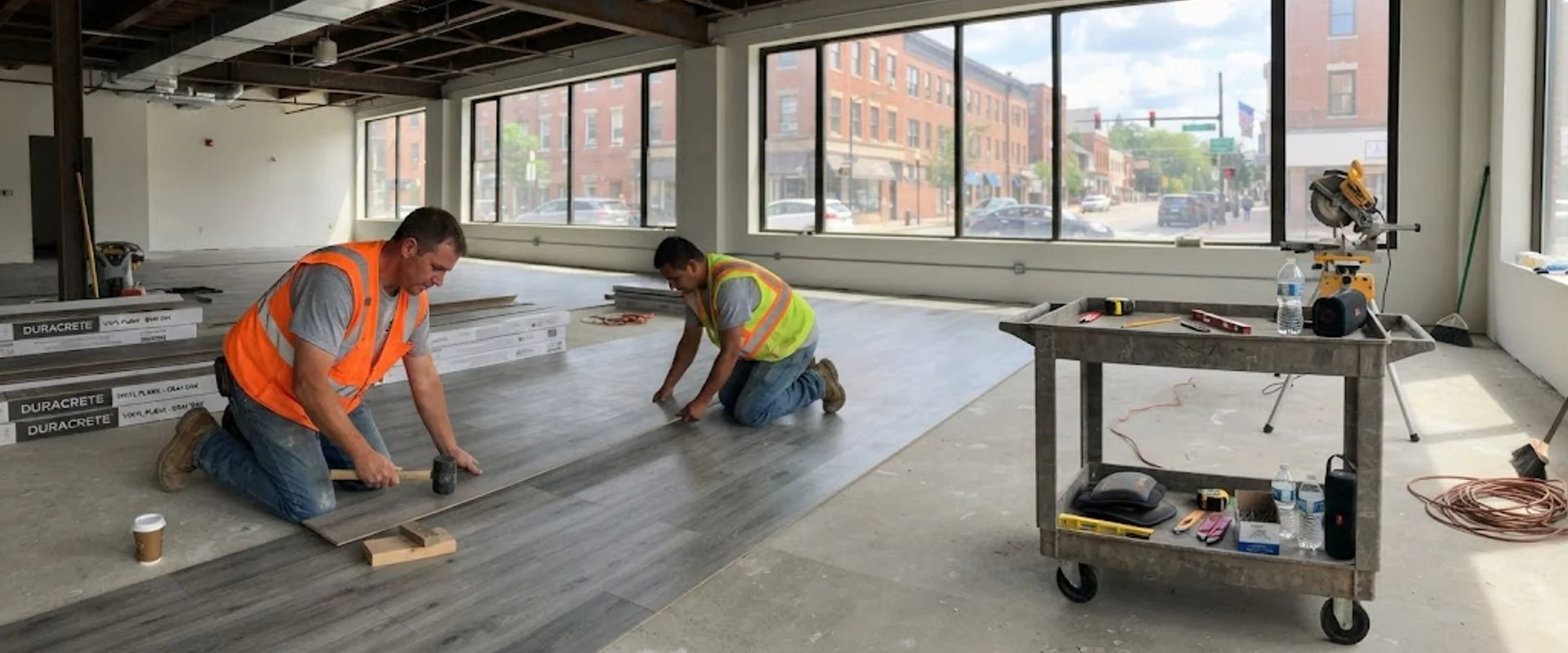
Commercial flooring is a different job than a residential floor swap. It usually means larger square footage, tighter deadlines tied to business closures, and materials chosen for foot traffic, spills, or heavy equipment rather than looks alone. In Meriden that spans retail spaces along the Berlin Turnpike corridor, office buildouts downtown, restaurants, warehouses, and medical or school facilities. Common installs include VCT and LVT tile, epoxy and polished concrete, carpet tile, rubber flooring for gyms or industrial floors, and sheet vinyl for kitchens and clinical spaces where seams and sanitation matter.
What to look for before hiring
Ask about experience with your specific floor type and building use, not just flooring in general. A contractor who does beautiful hardwood in homes may not have the crew or moisture-testing equipment for a slab-on-grade epoxy job in a warehouse. Check that they carry commercial liability insurance and can work around your operating hours or phase the job to keep part of your space open. Get a written scope that spells out subfloor prep, moisture testing, materials, warranty terms, and cleanup, since disputes usually come from vague scopes rather than bad installs.
How our ranking works
We score the 5 contractors listed here on factors like verified licensing and insurance, review consistency, responsiveness, and the range of commercial materials they actually install. See the full breakdown and current order in our ranked guide to Meriden flooring contractors, and read how we weigh each factor on our methodology page.